

TravelOS: a CRM for travel agencies and a tour marketplace
SaaS for travel agencies in Uzbekistan: tours, departure dates, free seats, bookings and clients in one workspace, with published tours going to a shared marketplace. Alongside it: mobile apps for travellers and agencies, a platform admin panel and a Telegram bot.
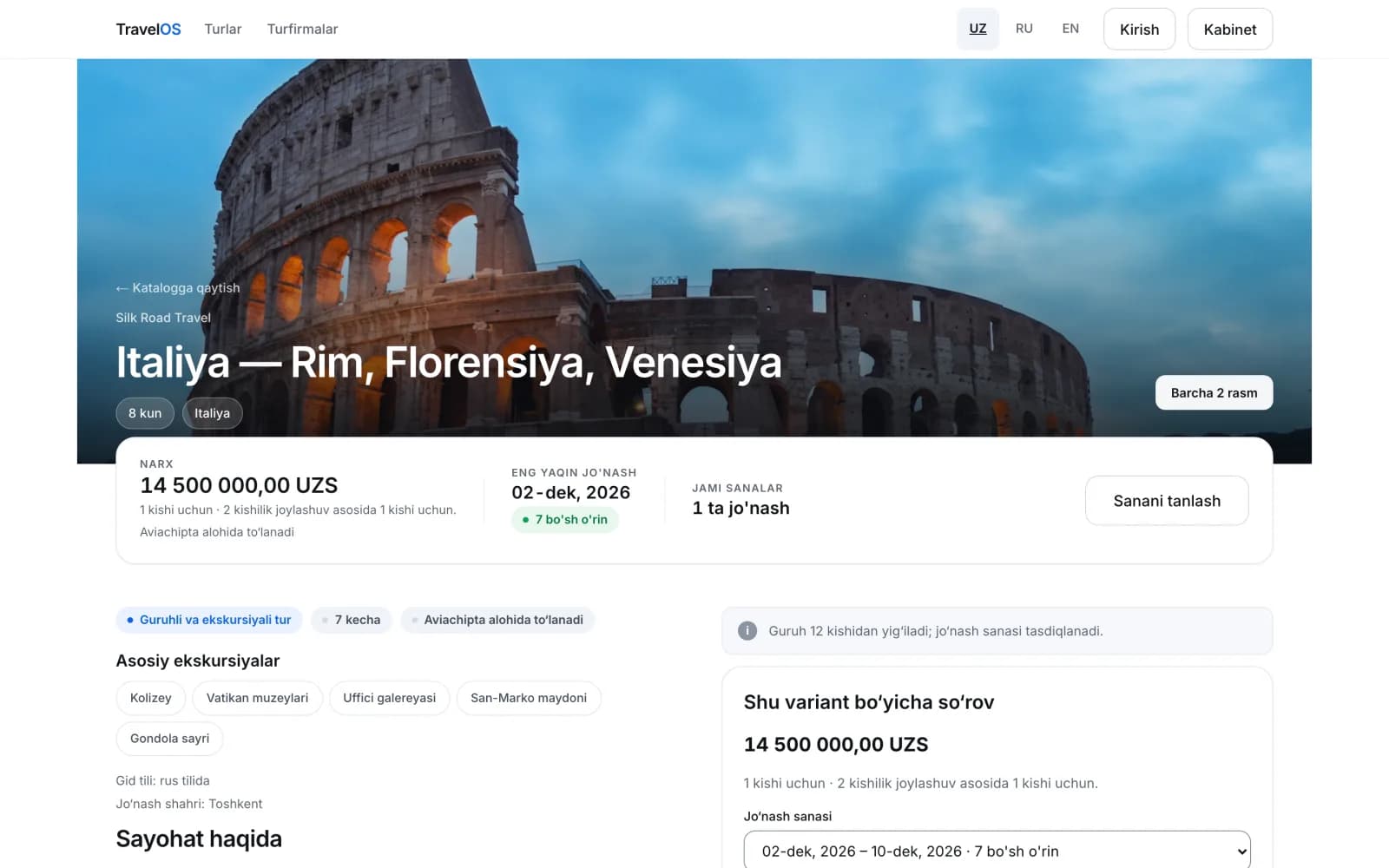
The idea and the problem
TravelOS is our studio's own product, currently at the MVP stage. In Uzbekistan, tours are often sold through Telegram posts: dates, prices and terms are written as free text, offers from different agencies are hard to compare, and the number of free seats in a post never updates. The idea: an agency runs its tours, departure dates and bookings in one workspace, and travellers see the date, price and free seats up front in a shared marketplace built from that data.
What we're building
We are building the product from scratch ourselves: the idea and interface design, a NestJS backend with a PostgreSQL database, the agency workspace and marketplace in Next.js, two Flutter mobile apps (for agency staff and for travellers), a platform admin panel, a Telegram bot and a Mini App.
Constraints
- Many agencies share one system: each sees only its own tours, bookings and clients, and staff work by role (owner, admin, manager, agent).
- Several managers can book the same departure at once, but seats sold must never exceed capacity.
- Tours are sold in som, dollars or euros.
- No online payment provider has been chosen yet: the site takes no money, and price and terms are agreed directly with the agency.
- Three languages (Uzbek, Russian, English), light and dark themes.
Key decisions
- Package templates. The agency first picks the kind of tour: resort stay, group and sightseeing tour, umrah and pilgrimage, combined tour or a plain package. The choice opens only the fields that matter, and the marketplace builds the card and tour page from that data. Everything runs on one tour model and a shared API; there is no separate database per template.
- Nothing unknown is made up. If the agency hasn't said who the price is for or whether flights are included, the system doesn't guess: the page says “to be confirmed”.
- Seats are booked under a lock. When booking, the departure row is locked in the database and the seat is held for 15 minutes. An expired hold goes back to the free seats, so one seat is never sold twice.
- A request instead of a payment. The traveller gets a ready-made request text for the chosen date and option and sends it to the agency. It isn't a booking: the agency confirms price and availability.
- Plans. A plan limits the number of published tours, team members and photos. A new agency starts on the free plan; for now a paid plan is bought by bank transfer and approved by an operator.
- Webhook integration. Agencies receive booking and payment events in their own systems. The webhook URL is checked both when it's saved and when an event is sent, and the system retries if delivery fails.
- A demo mode without a server. The agency app has a full mock API, so design and testing run in parallel with the backend.
How the product works
The agency workspace has a dashboard (sales, booked seats, fill rate), tours with a four-step new tour wizard, departure dates, bookings, a client base and reports. Booking statuses: held, awaiting payment, paid, confirmed, completed, cancelled and expired. Settings cover the team and permissions, message templates, client import and export, sales and commission rules, and integrations.
In the marketplace, tours can be searched by destination, date, budget, currency and package template. A tour page shows the itinerary, price, departure dates and free seats. The agency directory gives each agency its own page and tour list.
The traveller app (iOS and Android) has a glass-style interface with the catalog, filters, tour page and a request to the agency; the app's bookings section runs on sample data until its API is ready. The agency app covers the workspace's main sections: dashboard, tours, departures, bookings, clients and notifications. The platform admin panel handles approving or suspending agencies, plans, invoices and an audit log. For now the Telegram bot shows the marketplace.
Where it stands
The product is at the MVP stage and has no business metrics yet. The web workspace, marketplace and backend are deployed. The mobile apps, the Telegram Mini App and online payment are not released yet.
Screenshots were taken with local demo data: agencies, tours, clients and prices are placeholders, and the photos are from Unsplash and Wikimedia Commons. The agency app screens are from its mock mode.
Screens
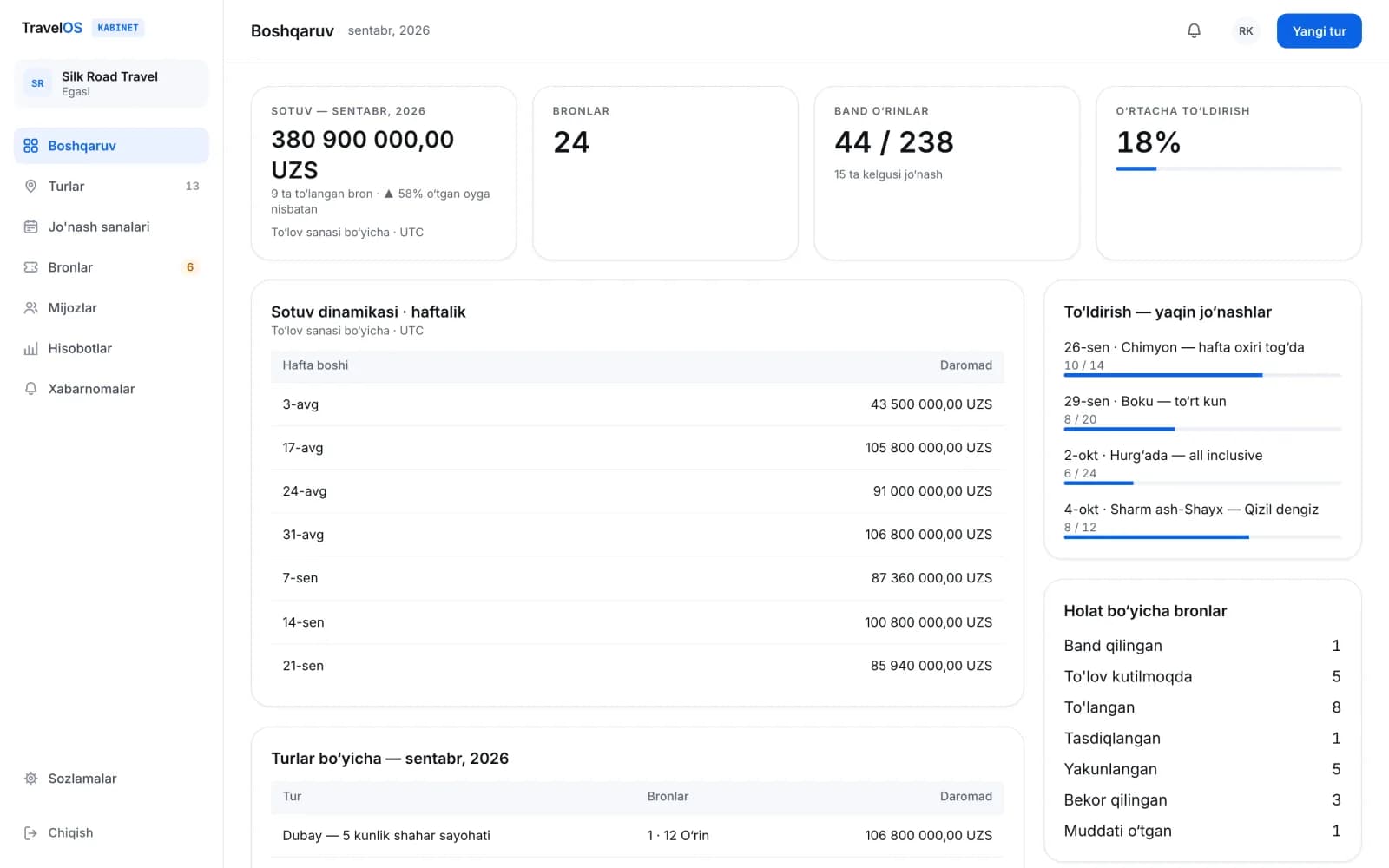
Workspace: sales, booked seats and upcoming departures
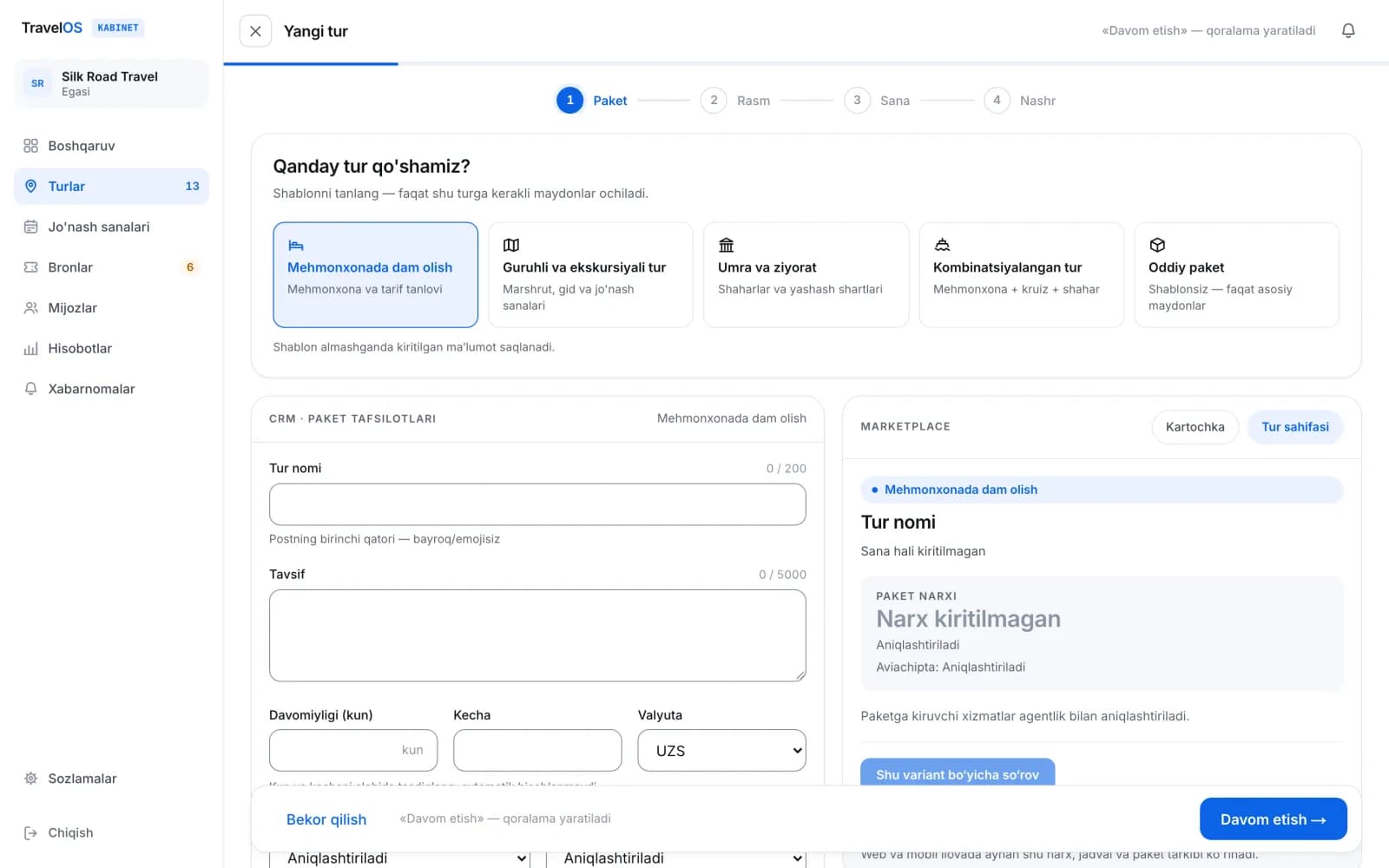
New tour: pick a template, see the marketplace view alongside
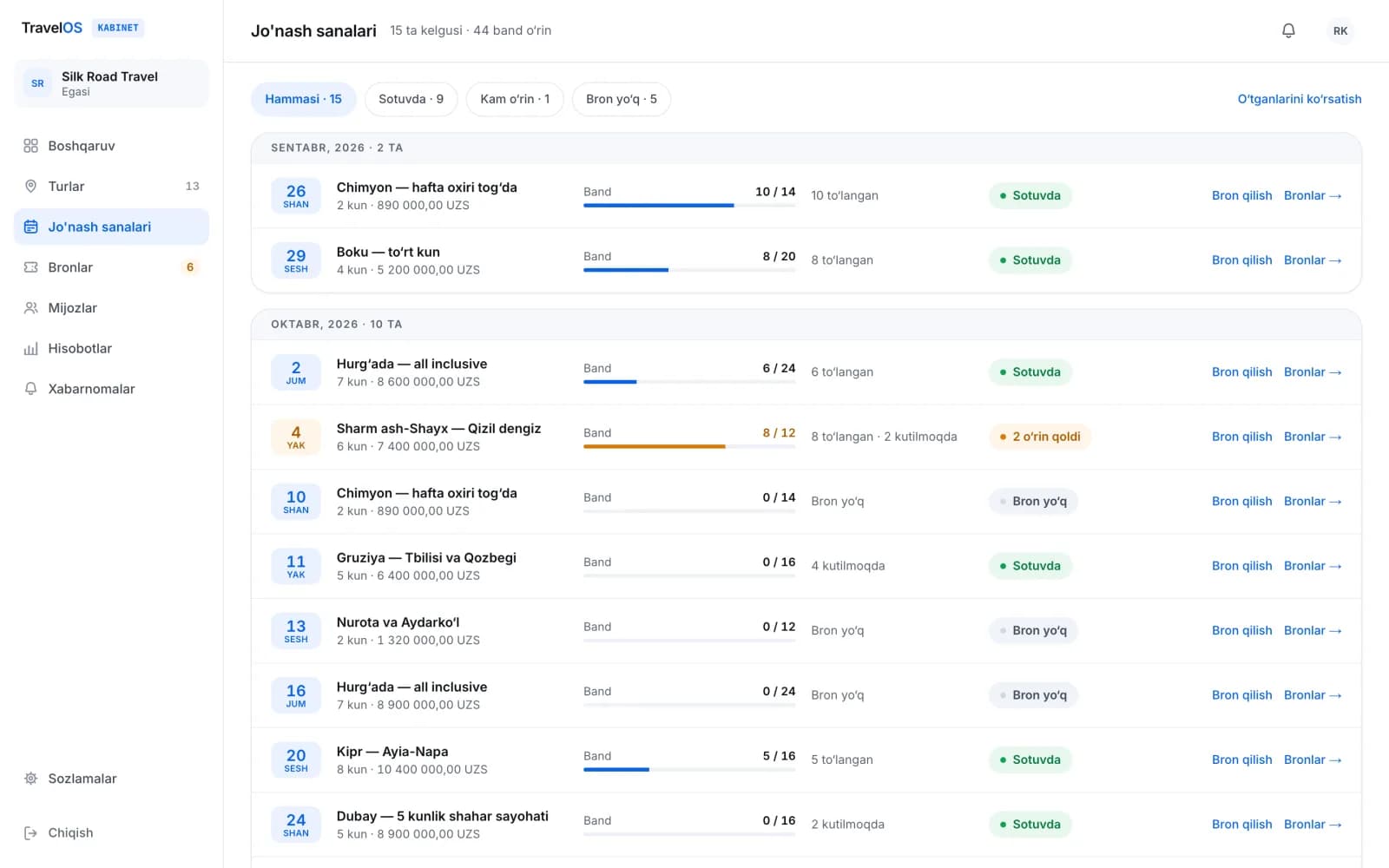
Departures: how many seats are booked on each date
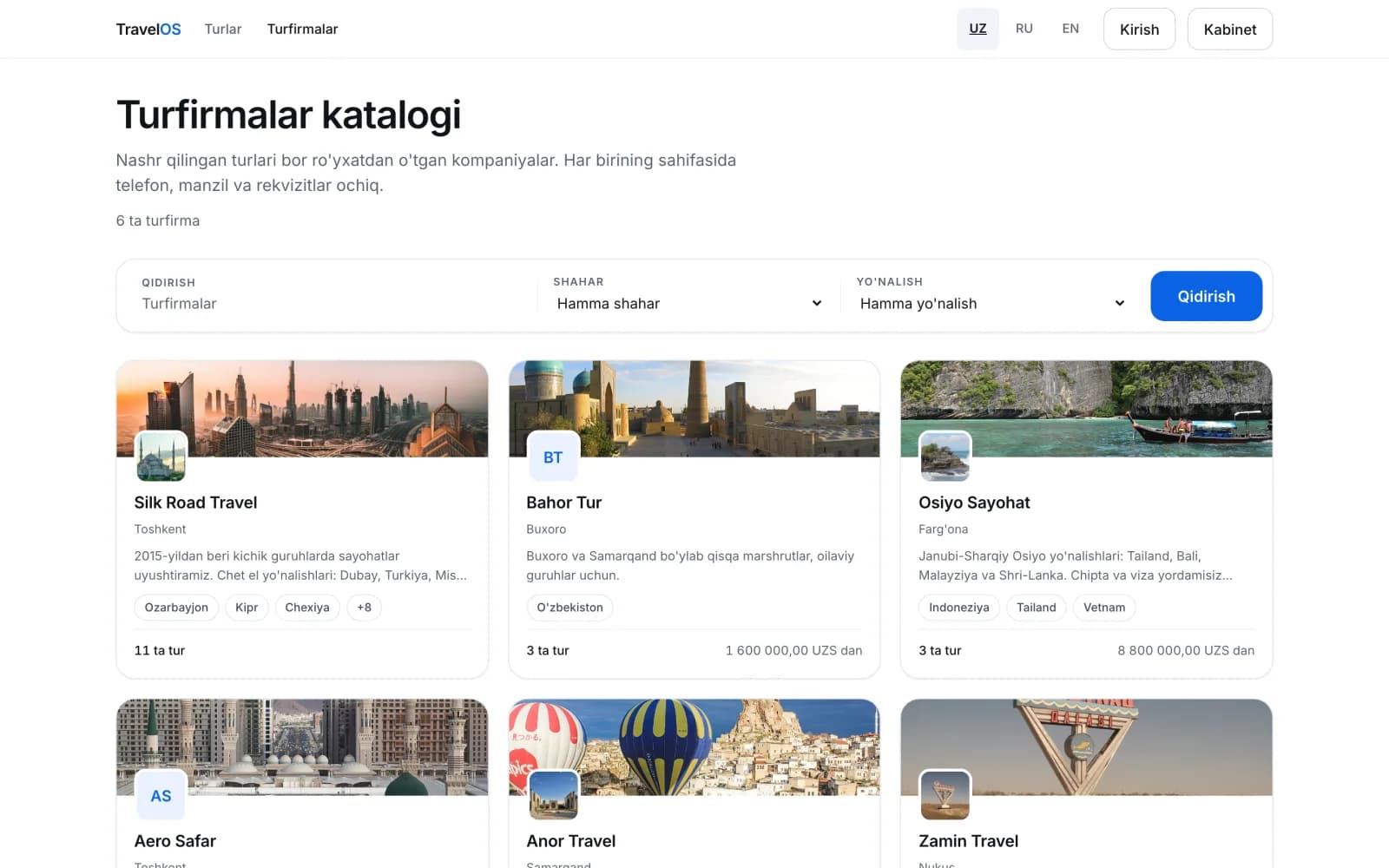
Marketplace: agency directory
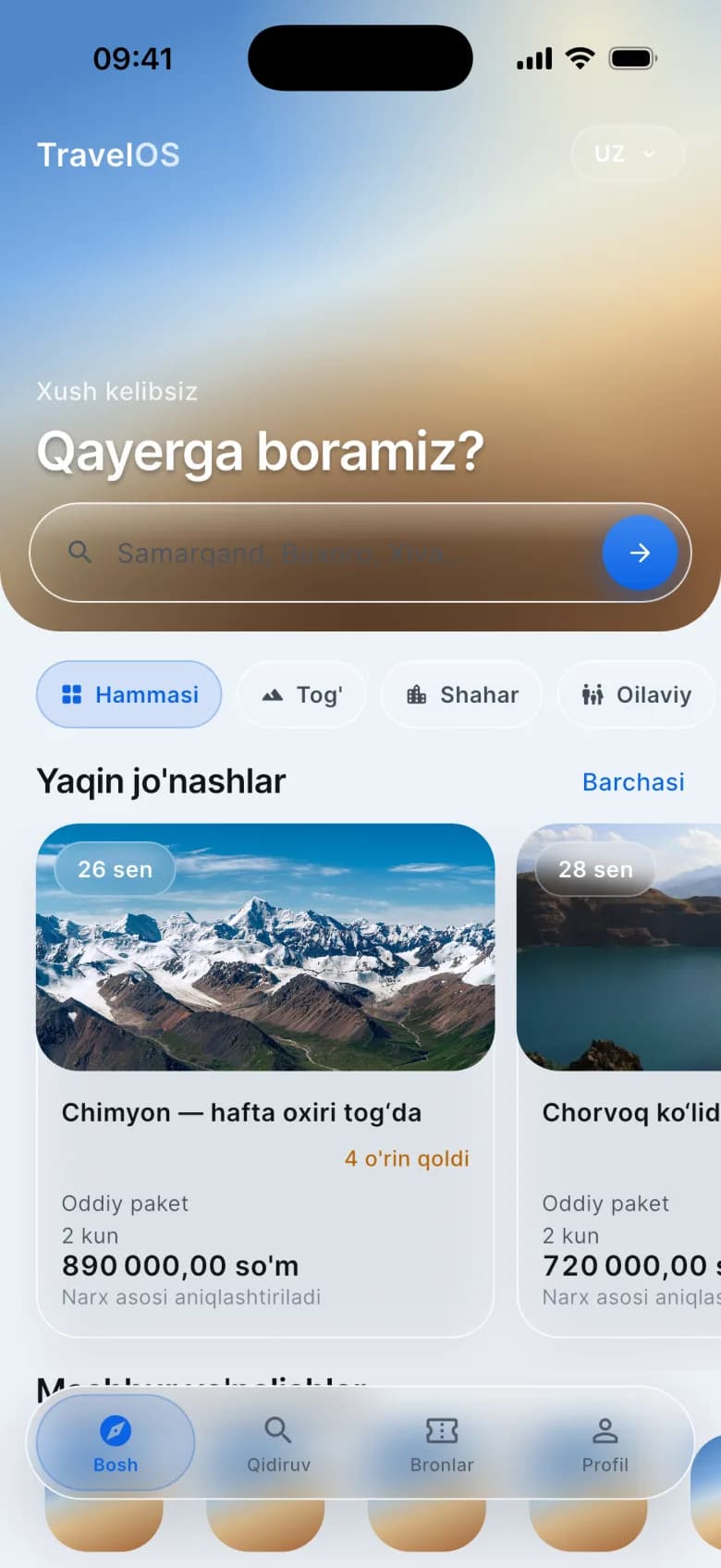
Traveller app: upcoming departures
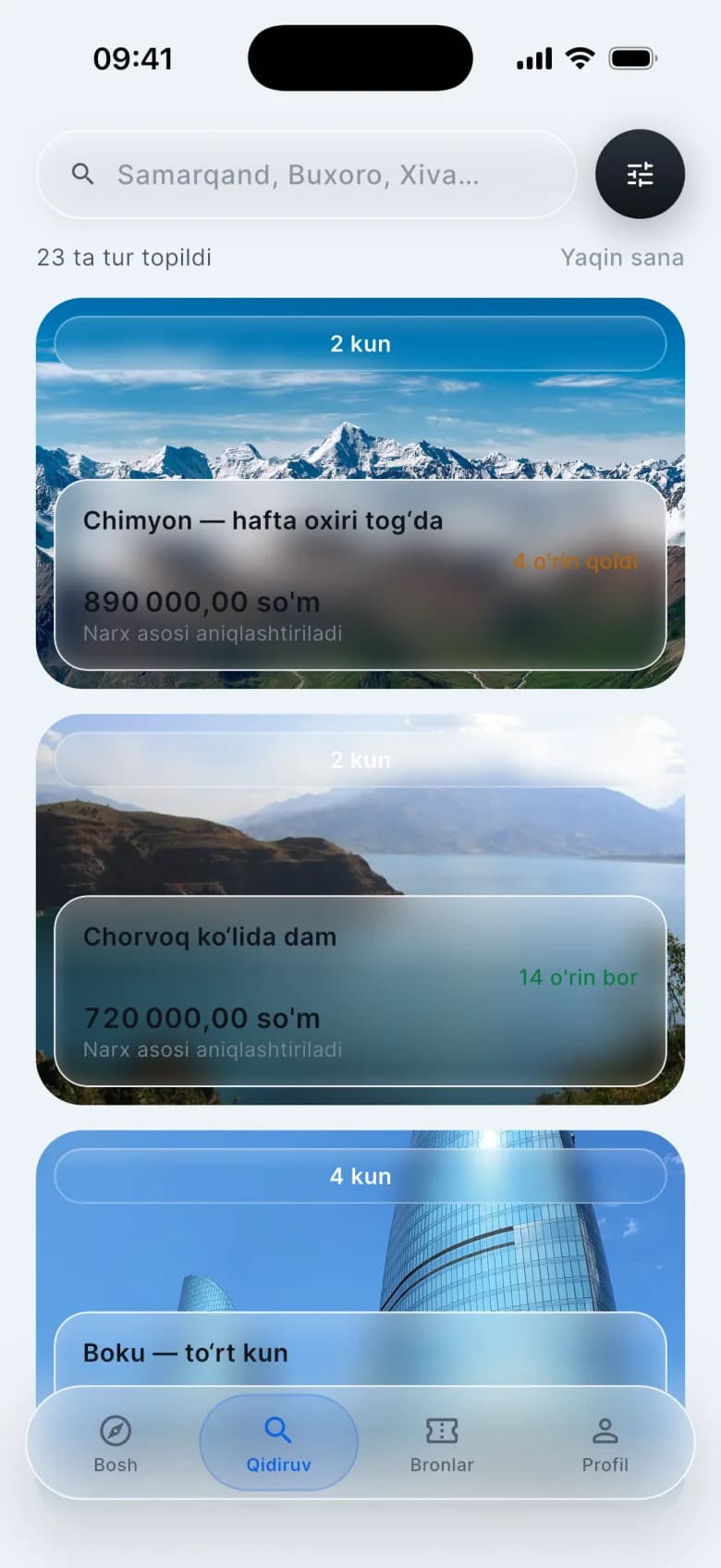
Catalog: price and free seats at a glance
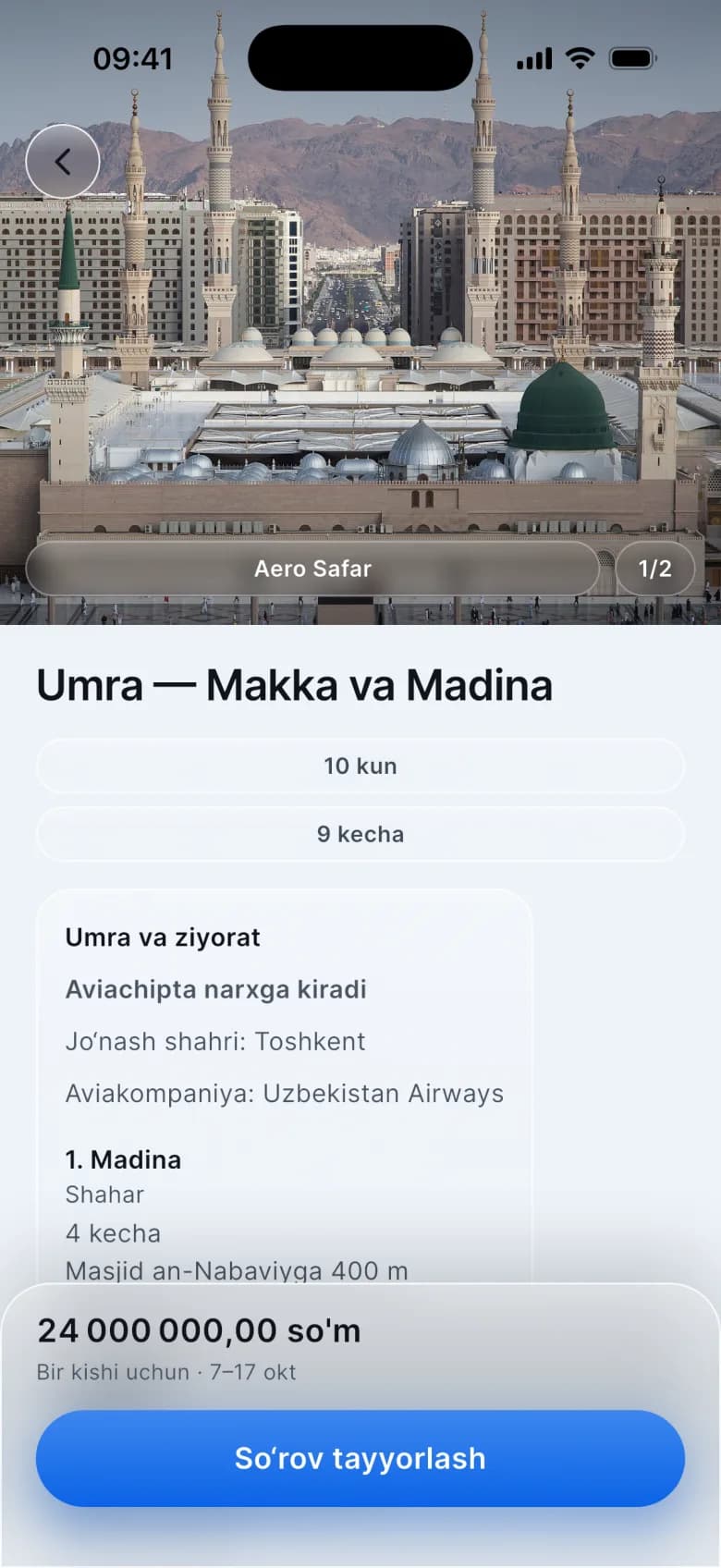
Tour page: itinerary from the umrah template
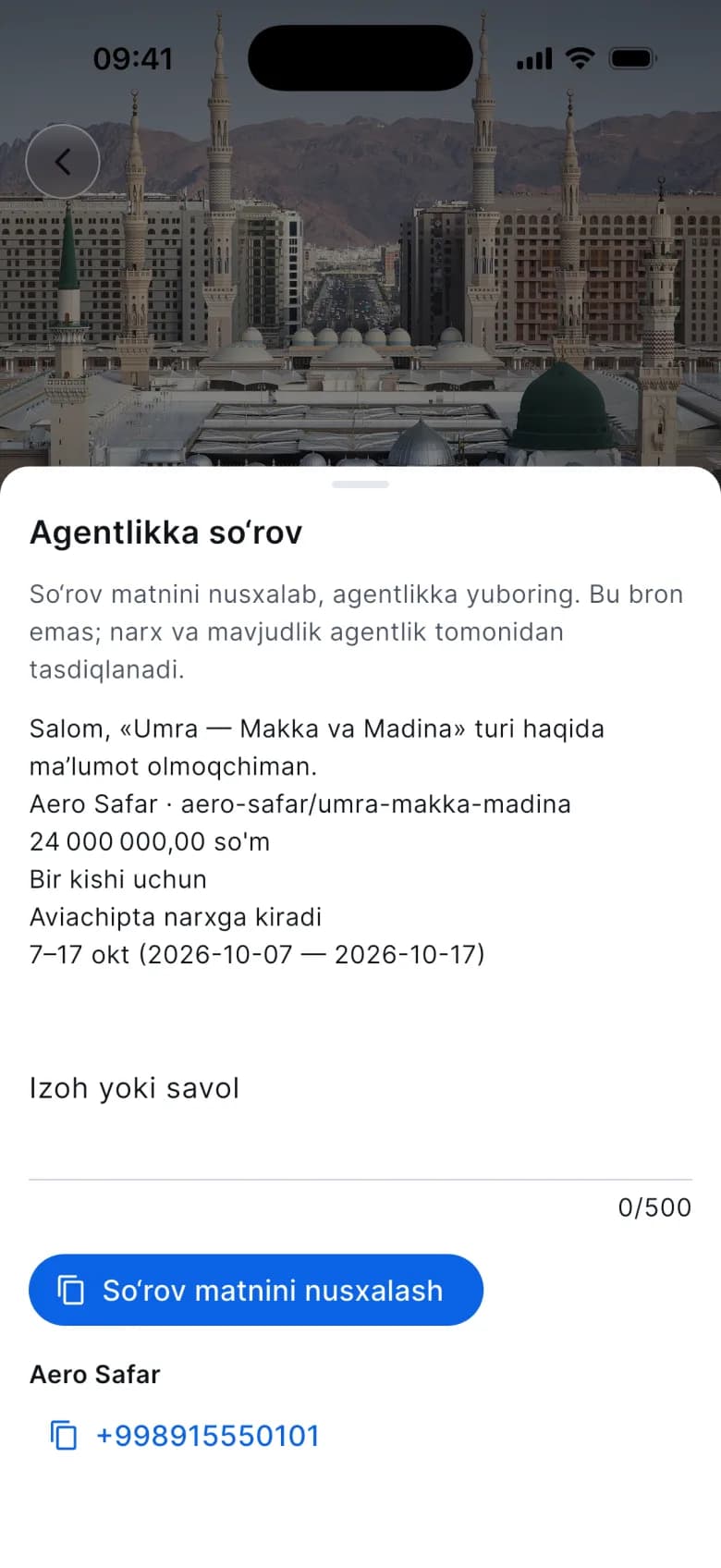
No payment: a ready-made request goes to the agency
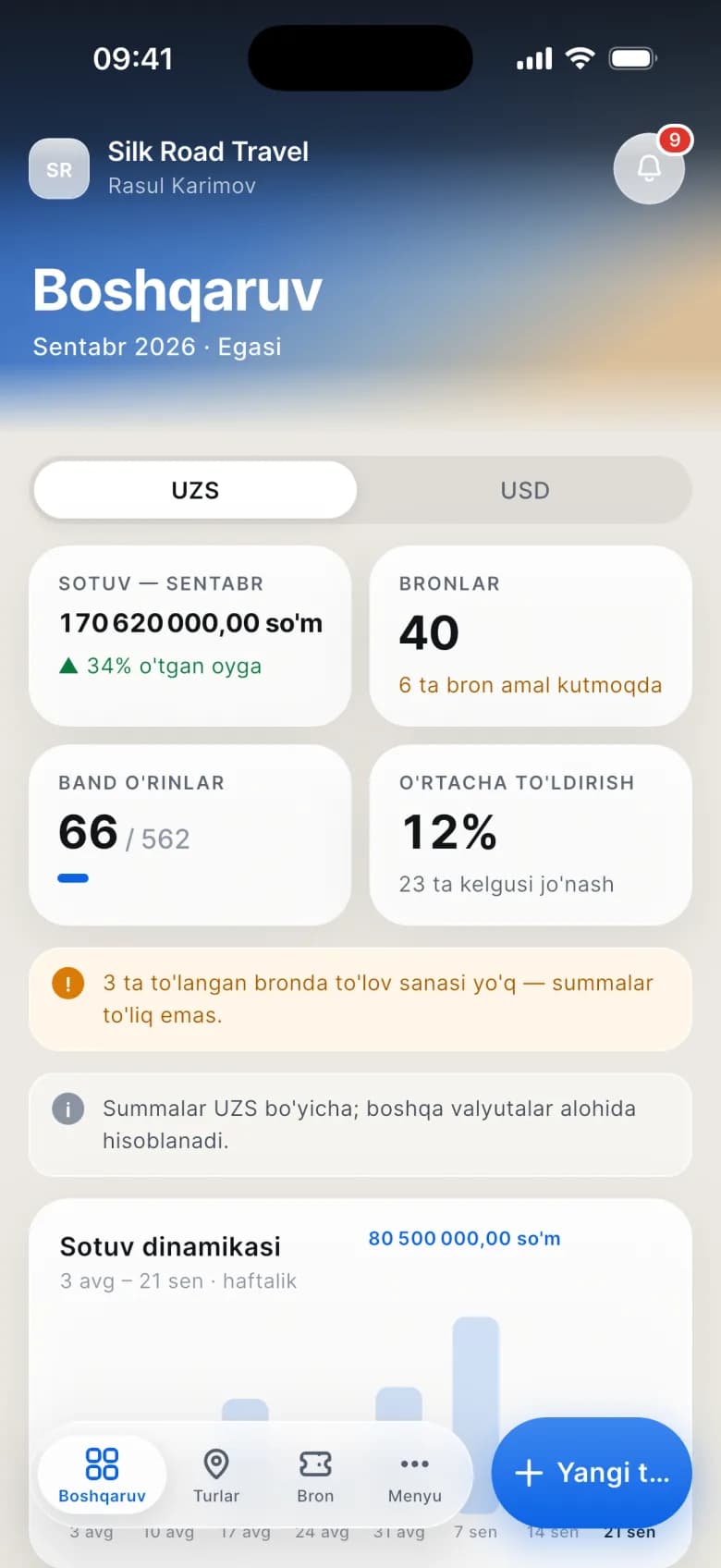
Agency app: dashboard
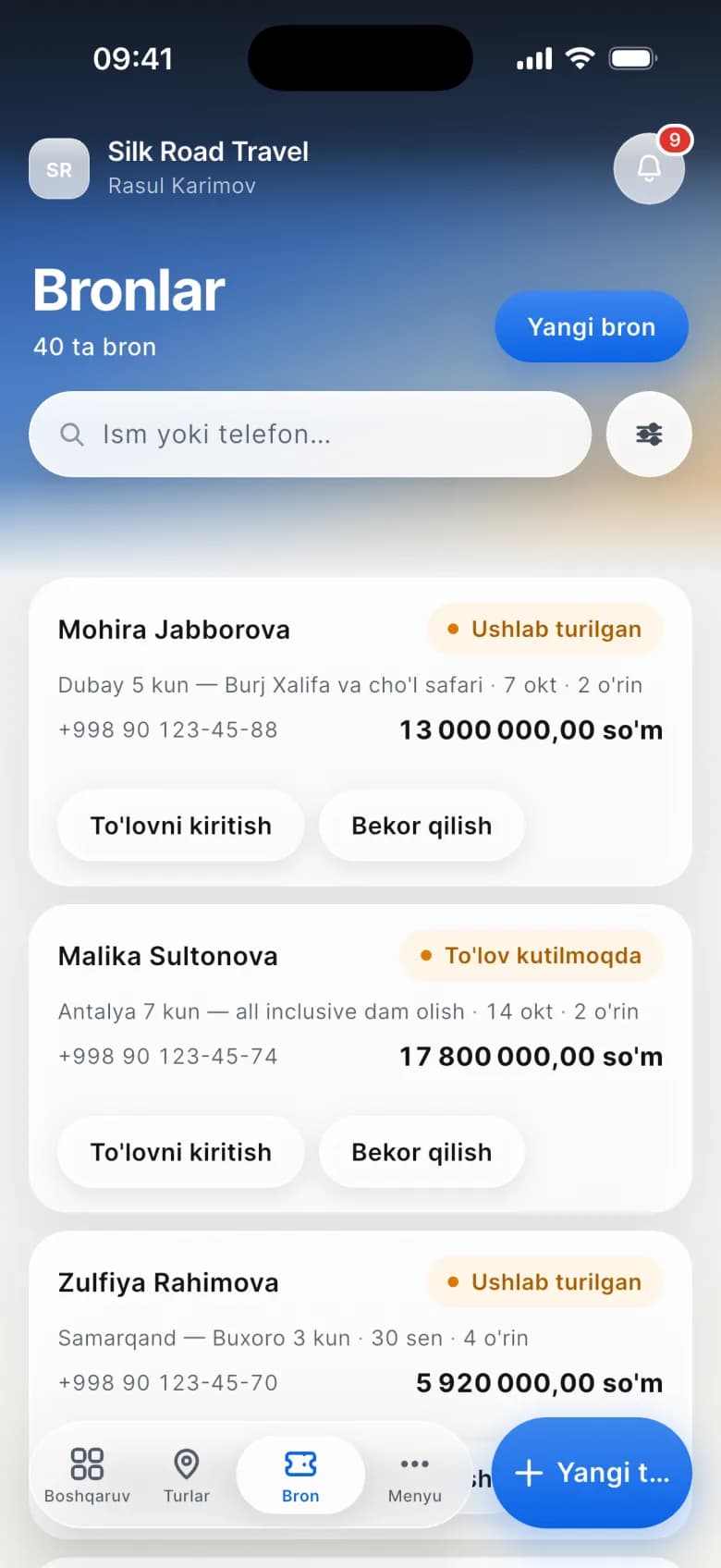
Bookings: record a payment or cancel
Need a product like this?
In a short call we'll discuss your idea and suggest the next step.